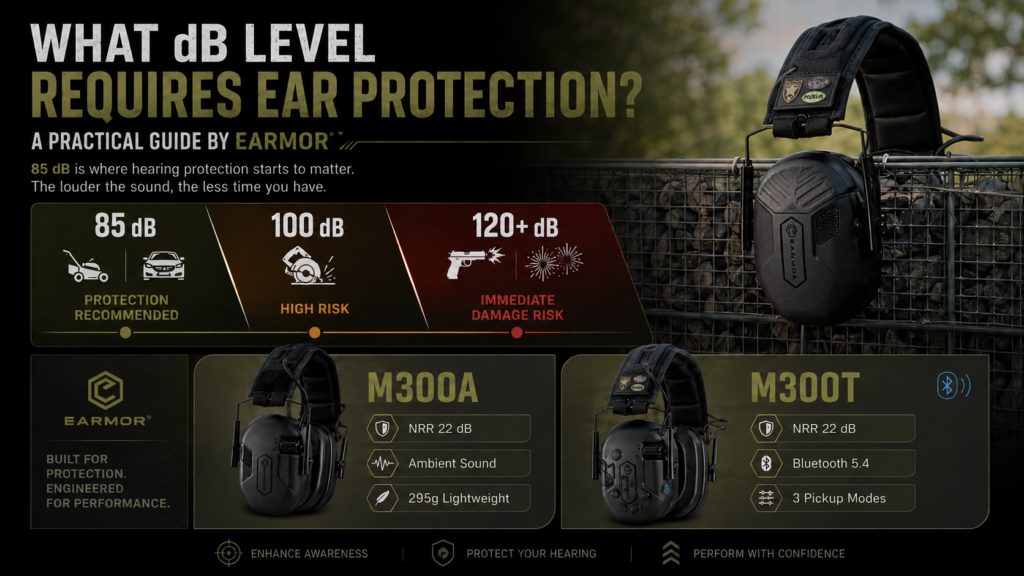
If you have ever asked, “What dB level requires ear protection?” the simple answer is 85 dB. That is the point where long-term exposure can begin to damage your hearing, especially if you are around loud noise regularly. AXIL’s guide uses the same 85 dB threshold and explains that the real risk depends on both how loud the sound is and how long you are exposed to it.
For shooters, hunters, range users, and people working around tools or outdoor equipment, hearing protection should not be an afterthought. Once hearing damage happens, it is often gradual, irreversible, and easy to ignore until it becomes serious. AXIL’s article also emphasizes that noise damage builds over time rather than always happening in one moment.
Why 85 dB Matters
According to the decibel guide structure used by AXIL, 85 dB is the practical starting point for hearing risk. Their article also highlights how safe exposure time drops quickly as noise levels rise: 85 dB for 8 hours, 88 dB for 4 hours, 91 dB for 2 hours, 94 dB for 1 hour, and 100 dB for 15 minutes.
That means hearing protection is not only for gunshots or industrial work. It also matters during yard work, power tool use, concerts, motorsports, and other noisy activities.
Common Sounds and Their dB Levels
Here are some common examples based on the decibel ranges explained in the AXIL article:
- Conversation: around 60 dB
- Vacuum cleaner: around 75 dB
- City traffic: around 80–85 dB
- Lawn mower: around 85–90 dB
- Power tools: around 90–95 dB
- Chainsaw: around 110 dB
- Gunshots: around 140–165 dB
The takeaway is simple: once you move into the 85 dB and above range, hearing protection becomes increasingly important.
How Long Can Loud Noise Damage Your Hearing?
The louder the sound, the less time you have before it becomes dangerous. AXIL’s article explains that hearing damage is cumulative, irreversible, and often goes unnoticed until it has already progressed.
This is especially important for:
- shooting ranges
- hunting trips
- lawn care
- heavy equipment use
- concerts and loud events
Even if the noise does not feel painful, repeated exposure can still cause damage over time.
What NRR Rating Do You Need?
Another key point in the AXIL article is the explanation of NRR, or Noise Reduction Rating. Their article uses the simple real-world formula:
(NRR – 7) ÷ 2 = estimated real-world reduction
That is why users should choose hearing protection based on both the environment and the type of activity. AXIL’s guide recommends higher protection for louder activities, especially shooting, where doubling up with earplugs + earmuffs may be necessary.
Best Hearing Protection by Activity
85–95 dB: Lawn Care and Tools
For moderate but sustained noise, earplugs, earmuffs, or electronic hearing protection can all work well. The goal is to reduce long-term exposure while staying comfortable.
95–110 dB: Heavy Equipment and Loud Outdoor Work
At this level, stronger protection is recommended. Electronic hearing protection can help reduce dangerous noise while still letting you hear your surroundings.
110–140 dB: Shooting and Industrial Noise
This is where hearing protection becomes critical. Gunshots and similar impulse noise can cause immediate damage, so reliable hearing protection is essential. AXIL’s guide specifically points to high-NRR protection and doubling up for the loudest activities.
Why EARMOR Hearing Protection Makes Sense
For users who need modern hearing protection for shooting and loud environments, EARMOR offers products designed around both protection and situational awareness.
According to EARMOR’s product materials, the M300A Electronic Hearing Protector features:
- NRR 22 dB
- ambient sound amplification
- suppression of noises exceeding 82 dB
- foldable design
- IPX5 waterproofing
- 2 x AAA batteries
- auto shutdown after 4 hours of inactivity
- lightweight 295g design
The same product materials also describe the M300A as using advanced digital signal processing technology to reduce noise in loud environments while improving ambient sound pickup and communication clarity.
For users who want Bluetooth functionality, the EARMOR M300T adds:
- Bluetooth 5.4
- three pickup modes
- NRR 22 dB
- gel ear pads
- IPX5 waterproofing
- 2 x AAA batteries
- auto shutdown after 4 hours of inactivity
Signs You Need Better Hearing Protection
If you notice any of these after noise exposure, your hearing protection may not be enough:
- ringing in the ears
- muffled hearing
- needing to raise your voice to be heard
AXIL’s guide uses these same warning signs to show when a sound environment is already too loud.
Final Thoughts: What dB Level Requires Ear Protection?
The best starting point is still 85 dB. But the real rule is even simpler:
- the louder the sound, the less time you have
- the longer you are exposed, the greater the risk
If you are around gunshots, power tools, loud outdoor equipment, or other high-noise environments, hearing protection should be part of your routine. EARMOR hearing protection products are designed to help reduce harmful noise while keeping you more aware of your surroundings, whether you are at the range, outdoors, or on the job.